
 Image 1 of 3
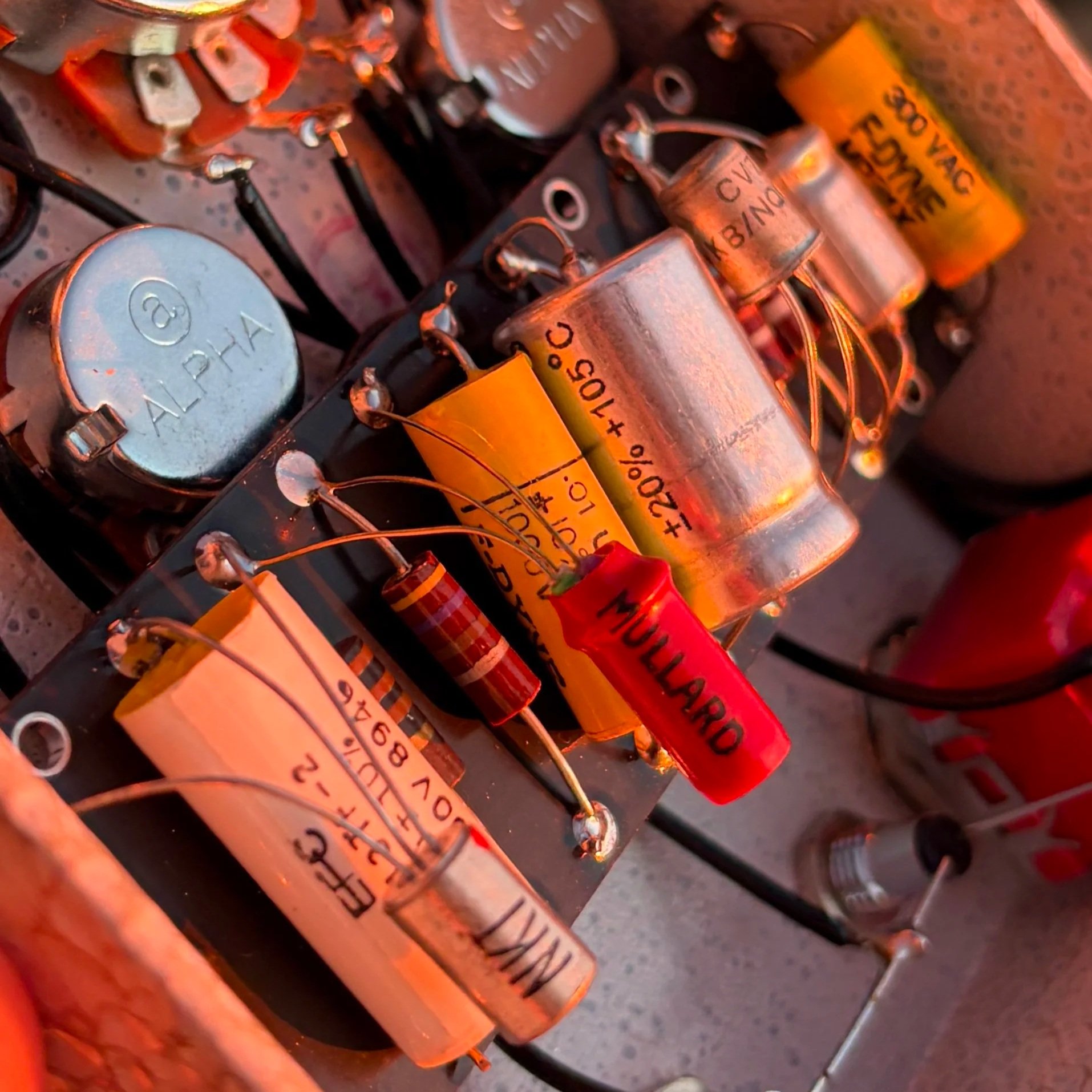 Image 2 of 3
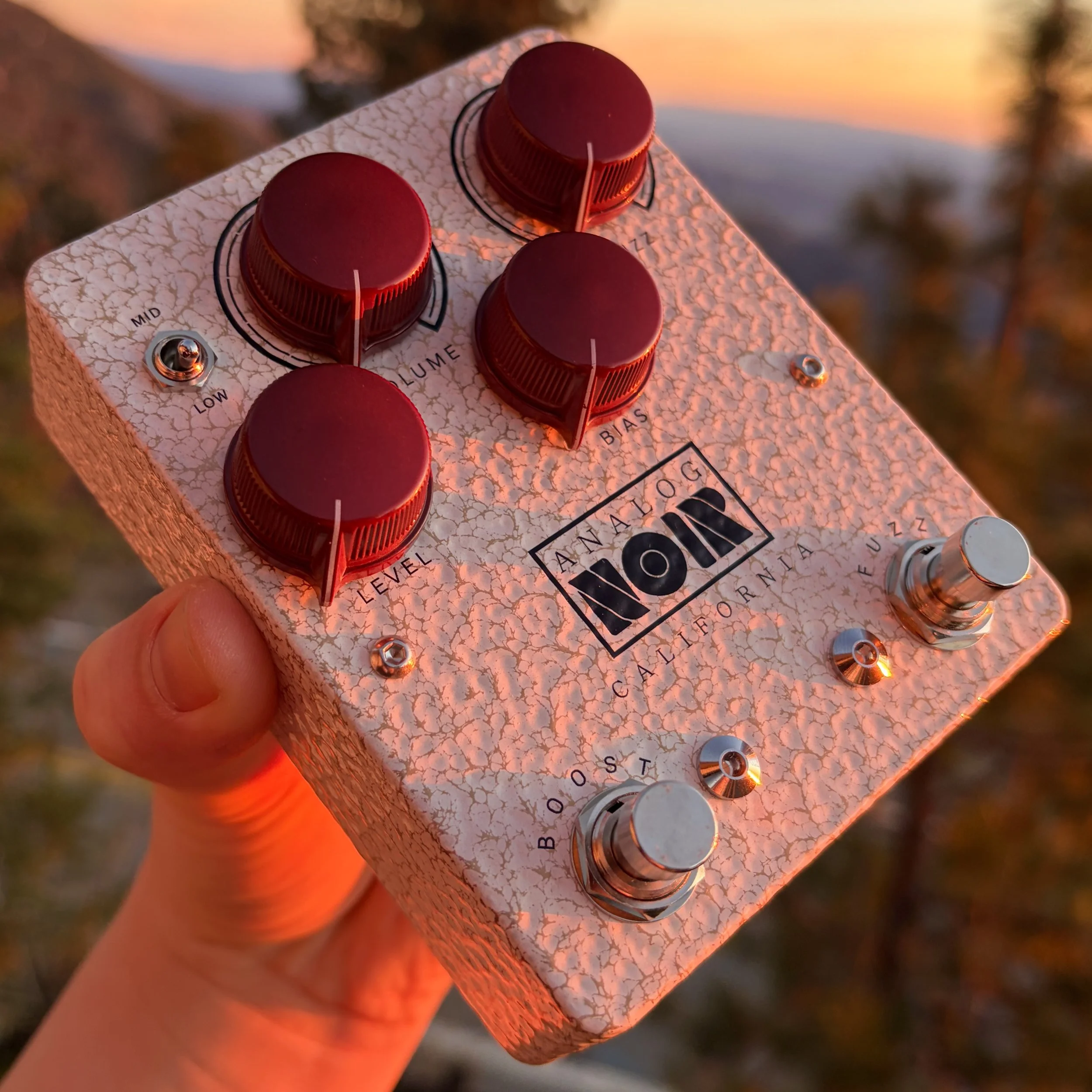 Image 3 of 3
Two classic circuits made by Dallas Arbiter in the mid 1960’s in one box.
The boost channel is a recreation of the 1965 Dallas Arbiter Rangemaster - a colored boost that emphasizes the upper-mid and treble frequencies of the guitar. This version features a toggle switch that modifies the EQ of the pedal for three distinct shades of boost. Use it as a standalone or stack it with the fuzz channel for a sound that rivals the MKII.
The fuzz channel is true to the early germanium Fuzz Faces built in England circa 1966. The circuit is responsive to different guitar and pickup combinations resulting from the unique impedance relationship between the pickups and input stage; place first in chain for best results.. An external bias control modifies the character of the fuzz for a gated / saxophone-like fuzz tone at the clockwise extreme, an articulate clean-up in the counter clockwise extreme, and a range of classic 60’s fuzz tones in the middle range.
BOOST CONTROLS
Volume
EQ switch (high, mid, low)
FUZZ CONTROLS
Volume
Fuzz
Bias
TRANSISTOR OPTIONS
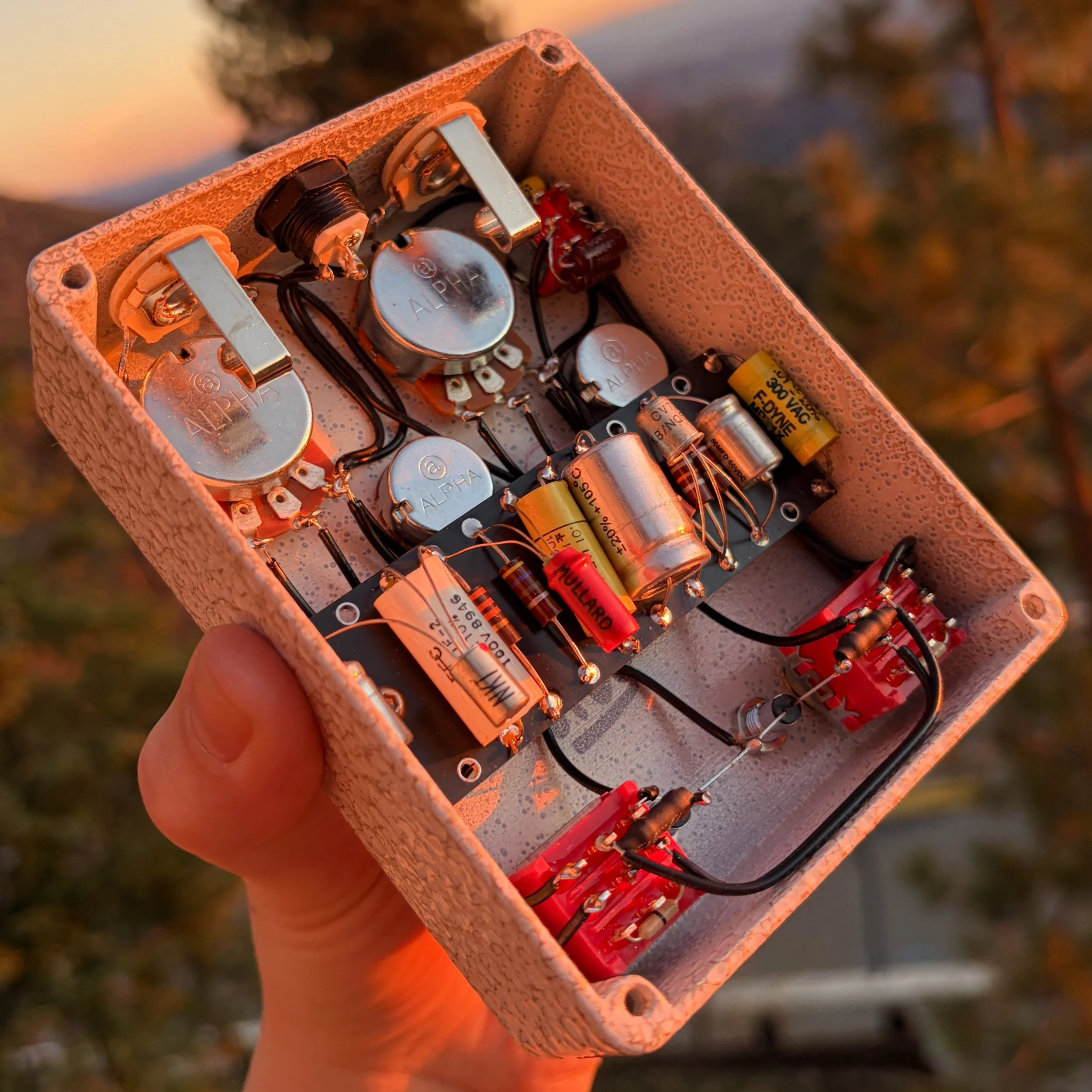
1974 Texas Instruments // 1970’s Mullard CV - a pair of mismatched 70’s mil spec germanium transistors. Medium high gain. Low noise. Chimey and articulate.
Mullard OC series // Mullard GET - a hybrid pair of 1960’s black glass and metal can Mullard transistors. Medium low gain. Excellent clean-up.
Mullard GET // Mullard GET - 70’s Mullard germanium transistors manufactured in the UK. Medium gain with exceptional clean-up.
New Market NKT // New Market NKT - a close cousin of the New Market NKT275 transistor used in the earliest runs of Fuzz Faces. These early 60’s New Market transistors are highly regarded for their touch sensitivity and harmonic complexity.
Equipped with standard 9V DC jack. This product uses vintage PNP transistors which require an isolated supply.
Two classic circuits made by Dallas Arbiter in the mid 1960’s in one box.
The boost channel is a recreation of the 1965 Dallas Arbiter Rangemaster - a colored boost that emphasizes the upper-mid and treble frequencies of the guitar. This version features a toggle switch that modifies the EQ of the pedal for three distinct shades of boost. Use it as a standalone or stack it with the fuzz channel for a sound that rivals the MKII.
The fuzz channel is true to the early germanium Fuzz Faces built in England circa 1966. The circuit is responsive to different guitar and pickup combinations resulting from the unique impedance relationship between the pickups and input stage; place first in chain for best results.. An external bias control modifies the character of the fuzz for a gated / saxophone-like fuzz tone at the clockwise extreme, an articulate clean-up in the counter clockwise extreme, and a range of classic 60’s fuzz tones in the middle range.
BOOST CONTROLS
Volume
EQ switch (high, mid, low)
FUZZ CONTROLS
Volume
Fuzz
Bias
TRANSISTOR OPTIONS
1974 Texas Instruments // 1970’s Mullard CV - a pair of mismatched 70’s mil spec germanium transistors. Medium high gain. Low noise. Chimey and articulate.
Mullard OC series // Mullard GET - a hybrid pair of 1960’s black glass and metal can Mullard transistors. Medium low gain. Excellent clean-up.
Mullard GET // Mullard GET - 70’s Mullard germanium transistors manufactured in the UK. Medium gain with exceptional clean-up.
New Market NKT // New Market NKT - a close cousin of the New Market NKT275 transistor used in the earliest runs of Fuzz Faces. These early 60’s New Market transistors are highly regarded for their touch sensitivity and harmonic complexity.
Equipped with standard 9V DC jack. This product uses vintage PNP transistors which require an isolated supply.